
Why is cybersecurity critical today?
Because attacks are growing in volume and sophistication, and an incident can halt operations, trigger fines (GDPR) and damage your reputation. The question is no longer “whether” it will happen, but “when” and “how prepared you are”.What does layered defense consist of?
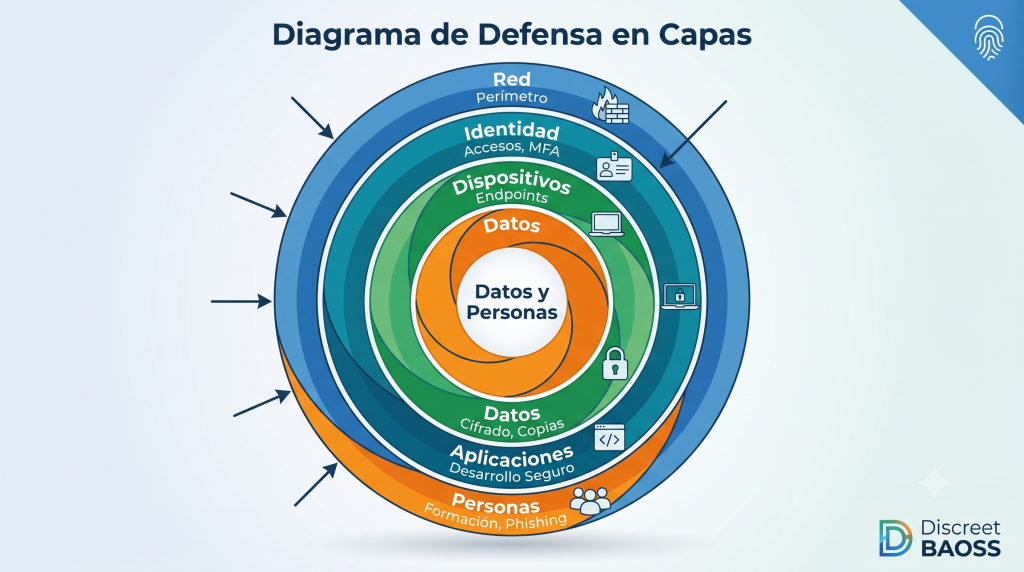
- Perimeter and network: firewalls, segmentation, VPN.
- Identity and access: MFA, least privilege, identity management.
- Endpoints: protection and monitoring of devices.
- Data: encryption, backups and leak control.
- Applications: secure development and reviews.
- People: training and phishing drills.
How to detect and respond to incidents?
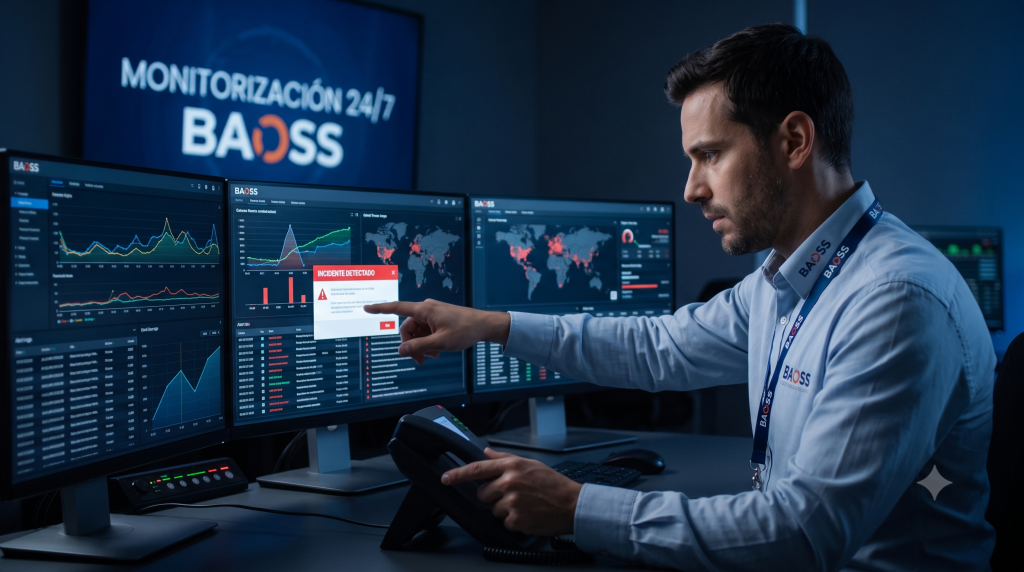
With 24/7 monitoring (SOC), alerts and a tested incident response plan. Detecting fast and containing in time makes the difference between a scare and a crisis.Which regulations must I comply with?
Depending on the case: GDPR (personal data), ENS (public sector) and ISO 27001 (security management system). Compliance not only avoids fines: it organizes and strengthens your security.Basic cybersecurity checklist
- [ ] MFA on all critical access points.
- [ ] Tested, isolated backups.
- [ ] Updates and patches up to date.
- [ ] Anti-phishing training for the team.
- [ ] Incident response plan.
Frequently asked questions
Is cybersecurity only for large companies? No. SMEs are frequent targets precisely because they are less protected. Security must be proportional to risk, not to size. Large or small, practically all companies today use cloud services, so any cloud migrations must review security and best practices from minute one to avoid problems later on. Where do I start? With an audit that identifies your risks and prioritizes the highest-impact measures. What is your level of exposure? At BAOSS we carry out an initial audit and design your personalized strategy based on the experience gained in our use cases. Write to us.Prefer to talk to us directly? Contact the BAOSS team and tell us about your challenge.