
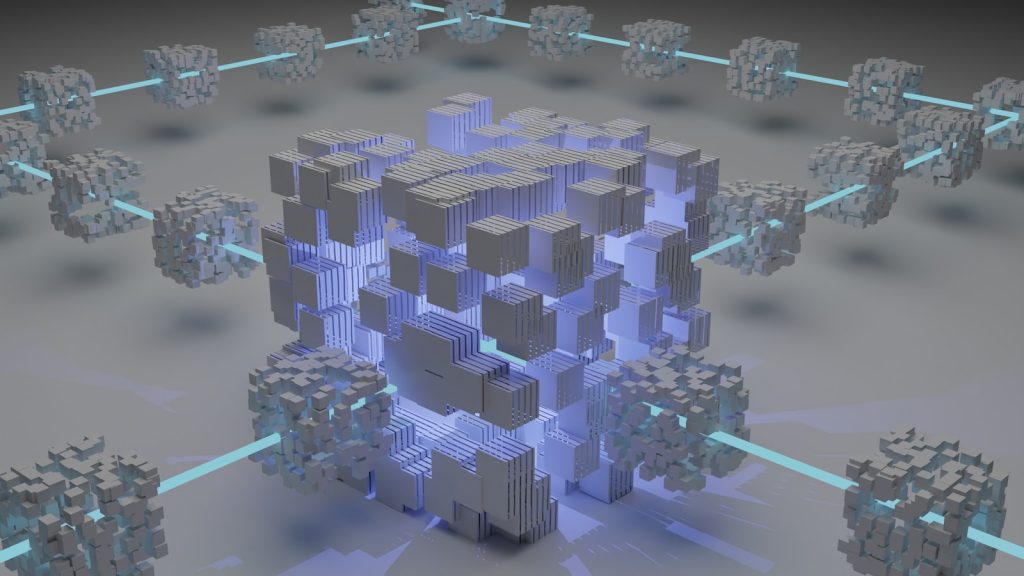
When people talk about blockchain, the mind goes straight to cryptocurrencies. But behind the speculative noise lies a technology of distributed, tamper-proof ledger with very concrete enterprise applications. For a data and process consultancy, the question is not whether the token goes up or down, but where it adds traceability and trust without intermediaries.
What blockchain brings to the enterprise
A blockchain is a ledger shared among several parties, where each record is encrypted and linked to the previous one. No one can rewrite the past without the network’s consensus. That very thing —verifiable trust— is the value for the corporate world.
4 real cases beyond crypto
1. Supply-chain traceability
Each batch records its origin, transport and handling. A retailer can prove a product’s ethical origin with a scan, not a promise.
2. Smart contracts
Agreements that execute themselves when a condition is met: payment is released when the system confirms delivery. Fewer disputes, fewer intermediaries.
3. Digital identity and credentials
Titles, certificates and permits verifiable cryptographically, without depending on a central issuer that could fail.
4. Asset tokenization
Representing an invoice, a property or a raw material as a token makes it easy to fractionate and liquidate illiquid assets.
When it DOES make sense, and when NOT
| Use blockchain if… | Better a traditional DB if… |
|---|---|
| Several parties don’t trust each other | One party controls the data |
| You need tamper-proof traceability | Data changes frequently |
| You want peer-to-peer automated deals | Logic is purely internal |
The role of data in a network
A blockchain alone is just a ledger. Value appears when it connects with analytics, orchestration and governance: deciding what on-chain data makes sense, and what should stay off-chain for privacy and cost. This is where a well-designed data strategy makes the difference.
Blockchain isn’t a magic solution, but in multi-party trust scenarios it is a legitimate tool. At BAOSS we assess where distributed technology fits in your data architecture, without dogma or hype.
Want to know if blockchain fits your operation? Talk to our consulting team.