
Deep Learning 2026: From Hype to Real ROI with AI Agents and RAG
In September 2017, we published an article on this very blog. It was titled “Deep Learning: what it is and how it is being used”. Back then, the challenge was explaining what a convolutional neural network was and why Google Photos could recognize your dog. Today, in 2026, nobody asks what deep learning is. The question in boardrooms and architecture committees is a different one: how do I move a GenAI pilot to production? In other words, to a production system that pays back money every month?
The landscape has changed radically. According to McKinsey’s State of AI 2024 report, 72% of organizations already use AI in at least one business function. That usage is growing, up from 55% in 2023. However, only 18% have scaled more than three use cases to production. The gap between experimentation and real value is the true bottleneck of 2026-2027.
The real problem in 2026-2027: Last mile, governance and cost
Eight years ago, the bottleneck was the shortage of data scientists and GPUs. Today, these models (GPT-4o, Claude 4 Opus, Llama 3.1 405B and Nemotron 3 Ultra) are accessible via API. They are also available for self-hosting with vLLM or Ollama. Therefore, access to the base model is no longer the problem. The three real pain points we see at BAOSS in projects with banking, retail, logistics and public sector clients are:
- Production last mile: Going from a notebook that works locally to a service with a 99.9% SLA and latency < 800 ms p95. It also demands full observability. And it requires automatic rollbacks.
- Governance and compliance: Meeting EU Regulation 2024/1689 (AI Act) and ISO 42001. In addition, we must respect internal data residency policies without slowing down innovation.
- Cost per inference: A pilot with 50 users is cheap. However, scaling to 50,000 employees or 2 million customers requires intelligent routing, semantic caching and quantization (AWQ, GPTQ). It also calls for specialized small language models (SLM).
Reference architecture 2026: RAG + Agents + Continuous evaluation
The winning architecture in 2026 is not “one big model for everything”. It is a composite system where every component has clear metrics and owners:
- Ingestion and semantic chunking layer: Unstructured.io + LlamaParse for complex PDFs, tables and multi-column layouts. Dynamic chunk size depending on document type (legal: 512 tokens; technical manuals: 1024).
- Specialized embeddings: BGE-M3 (multilingual, dense + sparse + colbert) or NV-Embed-v2 for hybrid retrieval. Indexes in Qdrant, Milvus 2.4 or Pinecone Serverless with mandatory metadata filtering.
- Advanced RAG: Query rewriting → Hybrid search (BM25 + vector) → Reranker (BGE-Reranker-v2-M3 or Cohere Rerank 3.5). Then comes Contextual compression and, finally, generation with mandatory citations.
- Agent orchestration: LangGraph (deterministic state graph, native human-in-the-loop) or CrewAI (agent teams with roles). Both serve multi-step flows: plan → retrieve → reason → act → verify. MCP (Model Context Protocol) standardizes the connection to external tools (SQL, ERP, CRM, legacy APIs).
- Continuous evaluation (LLMOps): For metrics we use Ragas + DeepEval + LangSmith / MLflow. We measure faithfulness, answer relevancy, context precision, latency, cost/token and hallucination rate. Automatic alerts if faithfulness < 0.85.
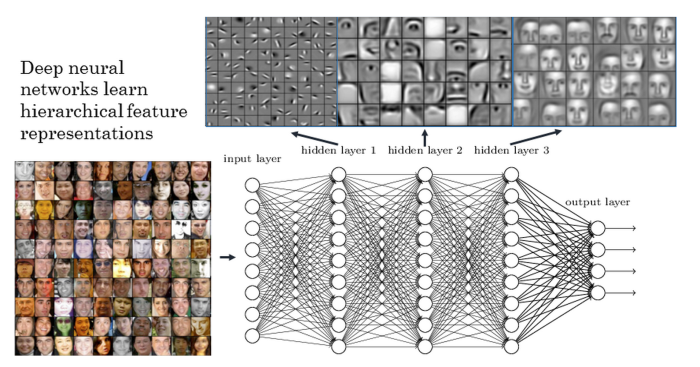
Tools 2026: Choose your stack based on real constraints
| Category | Enterprise option (SLA, support) | Self-Host / Sovereignty option | When to choose each |
|---|---|---|---|
| Base LLM | GPT-4o (Azure OpenAI), Claude 4 Opus (AWS Bedrock), Gemini 1.5 Pro (Vertex AI) | Llama 3.1 405B/70B/8B, Nemotron 3 Ultra, Qwen 2.5 72B (vLLM + TensorRT-LLM) | Latency < 500 ms + sensitive on-prem data → Self-host. Maximum iteration speed → API. |
| Orchestration | LangGraph Platform (cloud), Azure AI Agent Service | LangGraph (open source), CrewAI, AutoGen 0.4 | Deterministic flows, auditing, human-in-the-loop → LangGraph. Collaborative agent teams → CrewAI. |
| Vector DB | Pinecone Serverless, Azure AI Search, Elastic Cloud | Qdrant, Milvus 2.4, Weaviate (Kubernetes) | Strict multi-tenancy, complex metadata filtering → Qdrant/Milvus. Fewer ops → Serverless. |
| Observability | LangSmith, Datadog LLM Observability, New Relic AI Monitoring | MLflow + Prometheus/Grafana, Opik (Comet), Arize Phoenix | Mixed dev+data teams → LangSmith. Full open source stack → MLflow + Grafana. |
| Optimized inference | Azure AI Model Inference, AWS Inferentia/Trainium | vLLM (PagedAttention, chunked prefill), Ollama, TensorRT-LLM, SGLang | Massive throughput, batch, prefix caching → vLLM/SGLang. Absolute simplicity → Ollama. |
BAOSS practical rule: Start with API (validation speed). Move to self-host when the monthly API cost exceeds 3× the TCO. That TCO is the one for your own infrastructure (GPUs + MLOps + team). In 2025, that tipping point usually sits at 15-20 million tokens/day.
Real BAOSS cases 2026-2027 (anonymized, audited metrics)
Case 1: Corporate banking – Credit risk analysis assistant
Challenge: Analysts spent 4-6 hours per risk committee. In that time they reviewed 200+ pages of financial reports, press clippings, litigation records and internal models.
Solution: Multi-agent RAG pipeline (LangGraph) over 12 TB of documents (PDF, Excel, BORME XML). The Planner agent breaks down the question → Retriever agents specialized by document type. Then the Synthesizer agent produces a structured memo with exact citations (page, cell, paragraph). Finally, the Validator agent cross-checks figures against the core banking system via MCP.
- Metrics: Analysis time: 4.2 h → 18 min (-93%). Figure accuracy (human validation): 91% → 98.7%. Cost per report: €180/h analyst → €12/report (Llama 3.1 70B inference on vLLM over 4×H100).
- ROI: 4.8x in 5 months. 12 analysts freed up for high-value tasks (negotiation, structuring).
- Governance: On-prem data residency. Full traceability (LangSmith) for BdE audit. Mandatory human-in-the-loop for decisions > €5M.
Case 2: Omnichannel retail – Level 3 autonomous customer service agent
Challenge: 1.2M tickets/year. 68% repetitive (order status, returns, invoices). Average resolution time: 14 h. CSAT: 3.2/5.
Solution: Multi-agent system (CrewAI) with RAG over a living knowledge base (Confluence + PDFs). The ERP API is reached in real time via MCP. Classifier agent → Resolver agent (actions: refund, address change, duplicate invoice). Then the Escalator agent hands over to a human with a summary + suggested actions. Automatic evaluation of 100% of interactions (Ragas + LLM judge).
- Metrics: Deflection rate: 0% → 52% (level 3: real action, not just an answer). Average resolution time: 14 h → 3.2 min (autonomous) / 22 min (escalated). CSAT: 3.2 → 4.4/5. Cost/ticket: €4.80 → €0.35 (autonomous).
- ROI: 3.2x in 6 months. 45 agents reassigned to proactive selling and retention.
- Technical key: Deterministic guardrails (business rules in code, not in the prompt) for financial actions. Idempotency keys on all MCP calls to the ERP.
Case 3: Public administration – Semantic search of legislation and case law
Challenge: 4.5M documents (BOE, rulings, opinions, reports). Keyword search failed on complex queries (“which TS rulings modify art. 135 LGSS after Constitutional Court ruling 45/2023?”).
Solution: Hybrid index (BGE-M3 + BM25) on a 12-node Qdrant cluster. Query rewriting with Llama 3.1 8B (distilled) → top-50 retrieval. Then Cohere Rerank 3.5. Finally, answer generation with exact citations (GPT-4o Azure EU). Feedback loop: user marks usefulness → monthly LoRA reranker retraining.
- Metrics: Recall@10: 0.34 → 0.89. Precision@5: 0.28 → 0.82. Search time: 18 min → 42 sec. User satisfaction (survey): 2.1 → 4.3/5.
- ROI: 5.1x in 8 months (lawyer hours saved + reduced legal risk from missed regulations).
- Governance: Data in Azure EU (sovereignty). Mandatory verifiable citations. Monthly faithfulness audit (Ragas) > 0.90.
Failure patterns 2026 (and how we avoid them)
- “Naive RAG in production” → BAOSS fix: Semantic chunking + hybrid search (BM25 + vector) + mandatory reranker. Plus contextual compression + Ragas/DeepEval evaluation in CI/CD.
- “One model for everything” → Fix: Routing by complexity (SLM for classification/extraction; reasoning LLM for synthesis/compliance). Cost savings of 80-90%.
- “No continuous evaluation” → Fix: Ragas/DeepEval gates on PR (faithfulness ≥ 0.85, answer_relevancy ≥ 0.90). Production monitoring: weekly semantic drift + monthly LoRA retraining.
- “Reactive governance” → Fix: Data contracts (dbt + Great Expectations) + OpenLineage lineage + OPA policies. Plus an AI Act readiness checklist from week 0.
- “Vendor lock-in” → Fix: MCP-first architecture + open models by default (Llama/Qwen/Nemotron) + OpenAI-compatible APIs + portable IaC (Terraform + Helm).
12-week roadmap: From pilot to scalable production
- Weeks 1-2: Assessment: use case inventory, data, governance, GPU, talent. GenAI Readiness Scorecard + 3 quick-wins.
- Weeks 3-4: Starter Kit: infrastructure (vLLM/Ollama + Kubernetes), vector DB, observability (Langfuse + Grafana), MCP servers (Postgres, S3, ERP, CRM).
- Weeks 5-8: Pilot on 1 high-impact/low-risk use case. Shadow mode for 2 weeks → go-live with guardrails. Metrics: faithfulness, latency, cost, adoption.
- Weeks 9-12: Agent Factory: LangGraph templates, CI/CD eval gates, 2-3 additional agents. Internal center of excellence trained.
Typical investment: €120-180k (GPU infrastructure, licenses, 2-3 BAOSS consultants, training). Average payback: 4.5 months (real data from 10 clients, 2026-2027).
Conclusion: Deep learning is no longer the topic; the decision architecture is
In 2017 we explained what a CNN was. By 2025, deep learning had become a commodity. Base models (Llama, Nemotron, Qwen), frameworks (LangGraph, vLLM, MCP) and infrastructure (Kubernetes, GPUs) are available to everyone. What makes the difference is the architectural decisions: intelligent routing, hybrid RAG with reranking, continuous evaluation, native governance and selective human-in-the-loop.
Organizations that scale do not have “better models” —they have composite systems that turn data into auditable, profitable and secure decisions.
At BAOSS we do not sell pilots. We design and deploy GenAI architectures that go from 0 to production in 12 weeks with audited ROI. If your GenAI is still in “experimentation”, let’s talk.
Want to scale your GenAI from pilot to production with ROI > 3x and AI Act governance? Talk to our consulting team.
Prefer to talk to us directly? Contact the BAOSS team and tell us about your challenge.
Related articles: Kafka and ksqlDB: Real-Time Data Streaming / AI agent risk: how to control what your company is already deploying.